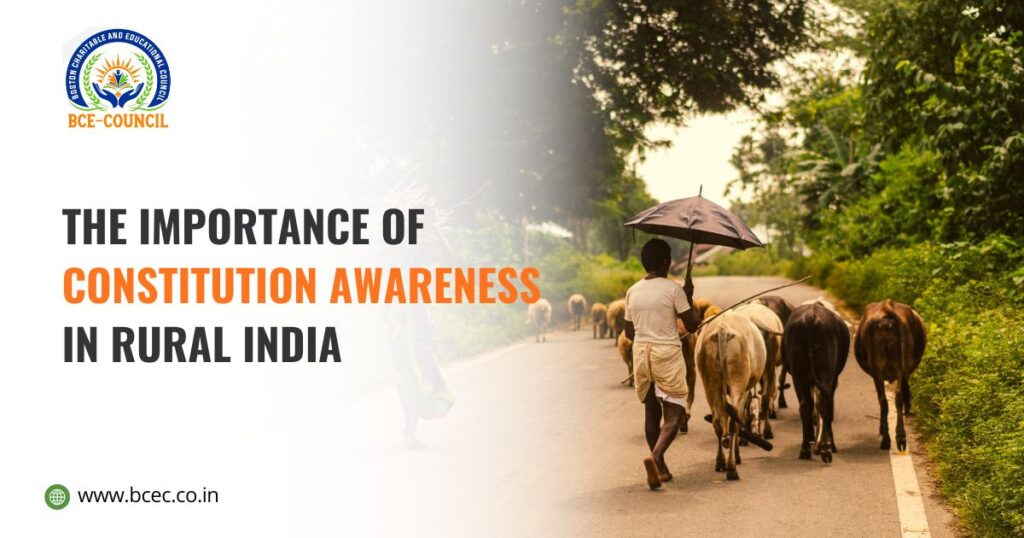
India’s Constitution is more than just a legal document—it is the foundation of democracy, equality, and justice for every citizen. Yet, in many rural and tribal regions, awareness of these fundamental rights and duties remains limited. Spreading constitutional literacy is not only about legal understanding; it’s about empowering individuals to claim their rights, participate in governance, and build a fairer, more just society.
The Constitution: Every Citizen’s Guide to Justice
The Indian Constitution guarantees a wide range of rights and freedoms, including:
- Right to Equality: Protection against discrimination on the basis of caste, gender, religion, or place of birth.
- Right to Freedom: Freedom of speech, movement, assembly, and more.
- Right to Education: Free and compulsory education for children aged 6 to 14.
- Right Against Exploitation: Safeguards against human trafficking, forced labor, and child labor.
- Right to Constitutional Remedies: The power to approach courts if rights are violated.
For rural and marginalized communities, knowing these rights is the first step toward safeguarding dignity and accessing opportunities.
Why Constitution Awareness Matters in Rural India
- Empowerment: Knowledge gives people the confidence to speak up against injustice, exploitation, and abuse.
- Access to Schemes: Awareness helps individuals claim benefits from government welfare programs and entitlements.
- Participation in Democracy: Informed citizens can make better choices, demand accountability, and engage actively in local governance.
- Protection from Exploitation: Understanding rights helps prevent land grabbing, bonded labor, and discrimination.
- Promotion of Social Justice: Spreads values of equality, fraternity, and secularism, bridging gaps across caste, gender, and community.
Challenges Faced
Despite its importance, constitutional awareness in rural areas faces barriers:
- Low Literacy Rates: Many are unable to read or comprehend complex legal language.
- Traditional Hierarchies: Social norms sometimes discourage marginalized groups from claiming their rights.
- Limited Access to Information: Rural regions often lack access to legal aid or educational resources.
How BCEC Promotes Constitution Awareness
Boston Charitable And Educational Council (BCEC) is committed to bridging the knowledge gap by:
- Organizing Awareness Camps: Interactive sessions on constitutional rights, duties, and remedies.
- Workshops in Local Languages: Ensuring information is accessible and relatable.
- Youth Engagement: Empowering the next generation with civic education and leadership skills.
- Legal Aid & Counseling: Connecting communities with legal experts and support systems.
Through these initiatives, BCEC helps rural citizens become informed, active participants in India’s democracy.
Success Stories: Real Impact
- Women’s groups using constitutional knowledge to challenge unfair practices.
- Farmers accessing government schemes after learning about their rights.
- Youth leading local campaigns for social change and justice.
Conclusion
Constitution awareness is a powerful tool for social transformation. When rural communities understand their rights, they can break cycles of poverty, injustice, and exclusion. By championing constitutional literacy, we lay the foundation for a stronger, more equitable India.
Want to learn more or support our Constitution Awareness programs?
Connect with BCEC today!